 Belgrade, Serbia
 info@alu-pvcbogdanovic.rs
 Mon – Fri: 08 AM – 04 PM
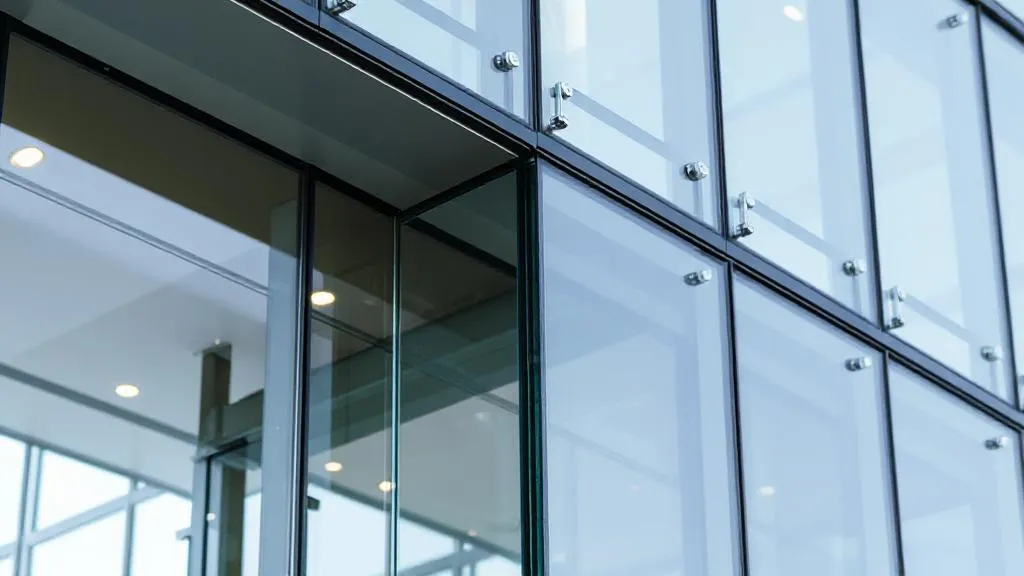
Facade glass with UV protection – interior protection and energy efficiency
Facade glass with UV protection is used in modern construction to protect interior spaces from the harmful effects of ultraviolet (UV) radiation. The glass features a special coating that filters UV rays and reduces their transmission, preventing fading of furniture, textiles, floors, and other materials. This type of glass is most commonly applied in buildings with large glazed surfaces oriented to the south, southwest, and west, where exposure to sunlight is the most intense.
Facade glass with UV protection is an important component of modern architecture, especially in buildings with large glazed surfaces exposed to direct sunlight. By selecting glass with low UV transmittance values, long-term interior protection is ensured, energy efficiency is increased, and the lifespan of interior materials is extended. Combining UV protection with other protective layers provides a comprehensive solution for façade systems in compliance with current technical and regulatory requirements.
Primary function of UV protection
UV radiation is invisible and present even on cloudy days. The penetration of UV radiation into a building through windows and façades can cause long-term material damage. UV-protective glass blocks most of these wavelengths without significantly reducing visible light transmission.
- Filters UVA and UVB radiation (wavelengths from 280 to 400 nm)
- Reduces fading of furniture, artworks, floors, and textiles
- Contributes to more stable interior conditions
Types of UV-protective glass
UV protection can be integrated into glass in several ways, depending on the façade type and technical requirements of the building.
- Low-E glass: primarily low-emissivity glass that also provides UV filtration
- Solar-control glass: an additional reflective coating that, along with UV protection, reduces heat radiation
- Laminated glass: two glass layers with a PVB (polyvinyl butyral) interlayer that blocks UV rays
- Combined IGU units: multilayer glass units containing multiple protective layers (UV, Low-E, solar-control)
UV protection efficiency
UV-protective glass can block between 90% and 99% of UV radiation, depending on the type of coating or interlayer. Efficiency is expressed through the UV transmittance value (percentage of UV radiation passing through the glass).
- Standard laminated glass blocks over 95% of UV radiation
- Low-E and solar-control glass with additional layers achieves up to 99% protection
- UV transmittance below 1% is considered excellent for interior protection
Aesthetic options and tints
UV-protective glass is available in various colors and tints to match the architectural appearance of the building. In addition to aesthetics, darker glass further reduces light and radiation transmission.
- Clear glass with an invisible coating (neutral appearance)
- Grey, green, and bronze glass with additional shading effect
- Reflective glass with UV and IR protection (suitable for commercial buildings)
Compatibility with façade systems
UV-protective glass can be used in all types of glass façades, including:
- Structural and semi-structural façades
- Ventilated glass façades
- Spider façades with point fixings
- Standard curtain wall systems
Additional functions and combinations
UV protection is often combined with other functions within a single glass unit to achieve optimal energy and safety performance.
- Combination with burglary-resistant and safety glass
- Acoustic insulation combined with UV filtration
- Thermal insulation with low U-values and IR radiation blocking
Standards and technical characteristics
UV-protective glass must be manufactured and tested according to applicable European and international standards:
- EN 410 – optical characteristics (UV, VIS, IR transmittance)
- EN 673 – thermal conductivity
- EN 1279 – insulating glass unit performance
- EN 12543 – laminated safety glass