 Belgrade, Serbia
 info@alu-pvcbogdanovic.rs
 Mon – Fri: 08 AM – 04 PM
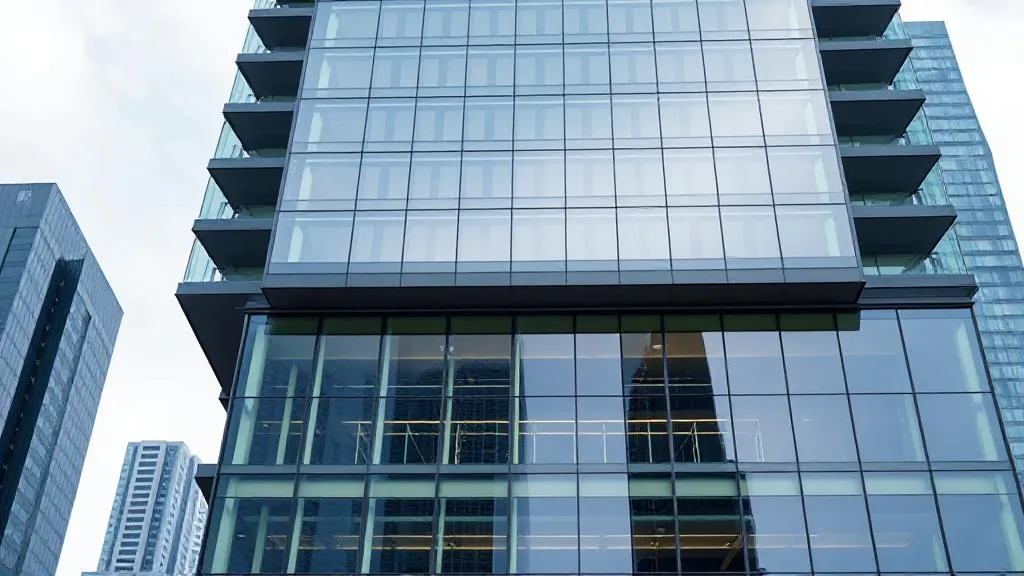
Façade with reflective glass – protection, functionality, and application
A façade with reflective glass is a type of glass façade in which glass panels are coated with a reflective (solar-control) layer that reflects solar radiation and reduces the amount of heat entering the building. Such façades are used on buildings with large glazed surfaces to provide protection against overheating, achieve energy efficiency, and at the same time ensure a modern, visually distinctive appearance.
A façade with reflective glass is a functionally and aesthetically justified solution for modern buildings. It enables effective solar control, reduces the need for cooling systems, and provides a visual effect aligned with contemporary architectural trends. With the correct selection of glass type, color, and combination with appropriate profiles, an optimal balance between design, energy efficiency, and durability is achieved.
Characteristics of reflective glass
Reflective glass features a special metallized coating that reflects part of the visible light spectrum and infrared radiation. The coating is applied during the glass manufacturing process and is usually combined with safety or thermal insulation glass.
- Reflection of solar energy in the range of 30% to 60%, depending on the glass type
- Reduced heat penetration into the interior of the building
- Lower use of air-conditioning systems
- Visual protection – reflective appearance from the outside, clear view from the inside
Types of reflective glass
Reflective glass is produced in various variants depending on the technical and visual requirements of the project. It is most commonly used in double-glazed (IGU) units but can also be part of laminated or triple-glazed systems.
- Silver-reflective glass: high level of reflection, often used in commercial buildings
- Bronze and grey reflective glass: chosen for color and additional shading effect
- Blue or green reflective glass: aesthetic role aligned with façade color
- Double-coated glass: combines reflective and low-emissivity protection
Application of reflective glass in façade systems
Reflective glass is used in all types of glass façades, regardless of the system type. It can be part of structural, semi-structural, spider, or ventilated façades. The main goal is thermal protection and the creation of a stable indoor climate without additional load on cooling systems.
- Office buildings and shopping centers with large glazed surfaces
- Buildings with southern or western orientation
- Residential buildings with panoramic windows
- Architectural projects requiring a mirror-like visual effect
Advantages of reflective façades
Reflective façades offer multiple benefits to investors and building users. In addition to reducing cooling costs, they contribute significantly to the building’s aesthetics and user privacy.
- Reduced need for space cooling
- Protection against UV radiation and fading of interior furnishings
- Light control without additional shading systems
- Privacy – reflective exterior with preserved interior view
- Aesthetic effect of glass that changes color depending on angle and lighting
Maintenance and durability
Reflective glass has a long service life when properly installed and maintained. Periodic cleaning of glass surfaces is recommended to preserve optical clarity and the reflective effect. The coating is located inside the IGU unit and is not exposed to external influences.
- Maintenance using standard glass-cleaning agents
- The coating does not peel off as it is positioned inside the unit
- Resistance to UV radiation, rain, and temperature changes
Technical standards
Reflective glass must comply with standards related to optical properties, safety, and thermal performance. The most commonly applied standards include:
- EN 410 – light transmittance and reflection
- EN 673 – thermal transmittance
- EN 1279 – performance of IGU units
- EN 12150 – tempered glass
- EN 12600 – impact resistance